
Home » How Facelift Techniques Have Changed Over Time
Home » How Facelift Techniques Have Changed Over Time
The facelift has come a long way from its earliest days as a rudimentary skin-pulling operation. Today, it stands as one of the most refined and nuanced procedures in cosmetic medicine, offering patients natural-looking results with shorter recovery times and lower risks than ever before. Over the past century, surgeons have moved from simply stretching the skin to addressing the deeper structural layers of the face, fundamentally changing what patients can expect from the operating table. If you’re wondering how facelift techniques changed over time, this guide walks you through every major milestone.
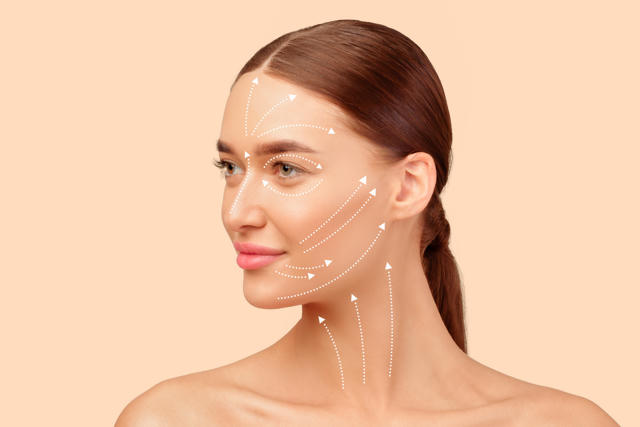
The origins of the modern facelift trace back to the early 1900s, when German surgeon Eugen Hollander performed what is widely considered the first documented facelift in 1901. The procedure was shockingly simple by today’s standards. Small ellipses of skin were removed near the ears and hairline, and the remaining skin was pulled taut. There was no understanding of facial anatomy beyond the surface level, and results reflected that limitation.
Throughout the first half of the twentieth century, facelift surgery remained largely a skin-only affair. Surgeons would remove excess skin and close the incisions, leaving patients with a noticeably “pulled” or “windswept” appearance that became something of a cultural shorthand for bad plastic surgery. The results often lasted only a year or two before gravity reasserted itself, because the underlying structures causing sagging were never addressed.
The defining problem with early techniques was that they treated the symptom (loose skin) rather than the cause, which is the descent of fat compartments and the weakening of deeper facial tissues.
Everything changed in 1974 when Vladimir Mitz and Martine Peyronie published their groundbreaking description of the superficial musculoaponeurotic system, now universally known as the SMAS. This fibromuscular layer sits just beneath the skin and connects the facial muscles to the overlying tissue. The discovery that this layer could be surgically manipulated was a turning point for the entire field.
Once surgeons understood the SMAS, the facelift procedure transformed overnight. Instead of simply pulling skin, surgeons could now tighten the deeper scaffolding of the face, redrape the skin with far less tension, and achieve results that looked genuinely natural. Recovery was longer and the surgery more complex, but the outcomes were dramatically superior, and they lasted.
Key developments during this era included:
Separate skin and SMAS flap elevation, allowing each layer to be repositioned independently
Vectors of pull that better mimicked the natural youthful facial structure
Reduced tension on skin closure, minimizing scarring and distortion
Significantly improved longevity of results
Building on SMAS techniques, plastic surgeon Sam Hamra introduced the deep plane facelift in 1990. Rather than treating the skin and SMAS as separate layers, this approach releases and repositions them together as a single composite flap. It goes deeper still, beneath the SMAS, to address the ligaments and fat compartments that are the true culprits behind facial aging.
The deep plane approach is particularly effective for patients with significant nasolabial folds, jowling, and midface descent. Because it works with the face’s anatomy rather than against it, the results tend to look remarkably natural. Many surgeons today consider it the gold standard for patients seeking a comprehensive lift that addresses multiple zones of the face simultaneously.
The tradeoff is complexity. The deep plane facelift requires extensive knowledge of facial nerves, which run through the very territory the surgeon is working in. Injury to these delicate branches can cause temporary or permanent weakness in facial expression, making the surgeon’s experience paramount.
As techniques grew more sophisticated, surgeons began developing approaches that targeted specific anatomical zones rather than the entire face. The mid facelift emerged as a procedure focused on the cheek and lower eyelid area – a region that ages distinctly, and that traditional lower facelifts often failed to address adequately.
The midface is home to the malar fat pad, which descends with age and creates the characteristic hollowness beneath the eyes and flattening of the cheeks. The mid facelift repositions this pad upward and outward, restoring the high, rounded cheek contour associated with youth. It can be performed through small incisions near the temples or lower eyelids, making it a less invasive option for patients whose primary concern is the middle third of the face.
Not every patient needs or wants an extensive operation. The rise of mini facelift surgery and the development of the minimal access cranial suspension (MACS) technique in the early 2000s expanded facelift options for a broader population, particularly younger patients in their forties and early fifties who were beginning to notice early signs of facial aging.
The MACS lift, introduced by Patrick Tonnard and Alexis Verpaele, uses purse-string sutures placed through small incisions to gather and lift the SMAS and underlying fat. Its advantages include:
Shorter incisions and reduced scarring
Faster recovery time compared to traditional techniques
Lower risk profile, making it suitable for patients who want to avoid general anesthesia
Effective results for mild to moderate facial laxity
Mini facelift surgery follows similar principles. It involves smaller incisions, less tissue disruption, and faster healing, and is best for patients who don’t yet need the more extensive correction of a full deep plane procedure. The limitation is longevity; these techniques may not provide the same lasting results as more comprehensive approaches, and patients with significant sagging may find them insufficient.
Today, facial rejuvenation is no longer just about surgical lifting. The modern approach is increasingly holistic, combining surgical techniques with complementary treatments to address volume loss, skin quality, and structural descent simultaneously.
Surgeons now routinely pair facelift surgery with:
Fat grafting to restore lost facial volume
Laser resurfacing or chemical peels to improve skin texture
Injectables to fine-tune results and extend longevity
Neck lifts and brow lifts for a more harmonious overall appearance
Imaging technology, 3D modeling, and a deeper understanding of facial anatomy have also elevated the standard of care dramatically. Surgeons can now plan procedures with a level of precision that was unimaginable a generation ago.
The evolution of technique has had a profound effect on what patients can realistically expect. Modern facelift results are characterized by natural-looking rejuvenation with effects that can last a decade or more when performed with deeper-plane techniques.
Recovery has also improved. Advances in anesthesia, wound care, and surgical instrumentation mean that many patients return to social activities within two to three weeks. And because today’s approaches work with the face’s natural anatomy, complications have become less common in the hands of experienced, board-certified surgeons.
The journey from a simple skin excision in 1901 to today’s sophisticated deep-plane and MACS procedures reflects not just technical progress, but a fundamentally deeper understanding of how the face ages and what it truly takes to turn back the clock.
If you’re ready to address sagging skin and restore a more youthful facial appearance, Age Focus is here to help you take the next step. Our experienced facial plastic surgeon, Dr. Gargiulo, brings a deep understanding of facial cosmetic surgery to every consultation, taking the time to evaluate the underlying facial tissues and deeper layers of the face before recommending a personalized treatment plan. Whether you’re considering a traditional facelift, a SMAS facelift that repositions the structural foundation beneath the skin, or a non-surgical facelift using dermal fillers and advanced injectables to improve skin tone and restore lost volume, Dr. Gargiulo will guide you toward the approach that best matches your anatomy, goals, and lifestyle.
Schedule your comprehensive lift consultation at Age Focus today and discover what modern facial rejuvenation can do for you.
The history of the facelift is, at its core, a story of surgeons learning to see past the surface. What began as a simple surgical procedure to remove excess skin has evolved into a sophisticated science that addresses soft-tissue layers, deeper tissues, and the superficial musculoaponeurotic system (SMAS) to produce results that look genuinely natural and last for years. Modern facial rejuvenation surgery can smooth deep wrinkles, redefine facial contours, restore volume lost to aging, and deliver a more youthful appearance without the telltale tightness of older techniques, all while minimizing serious risks like facial nerve injury that once made patients hesitant to pursue surgical options.
Today’s facial plastic surgery clinics offer a spectrum of facial surgeries and complementary cosmetic procedures tailored to each patient’s unique anatomy, meaning a surgical facelift is no longer a one-size-fits-all operation. By working with the underlying tissues rather than simply pulling the skin, contemporary surgeons can turn back the clock in ways that feel authentic, restoring not just a youthful appearance but confidence and quality of life for patients at every stage of the aging journey.
Dr. Gargiulo
February 19, 2026
